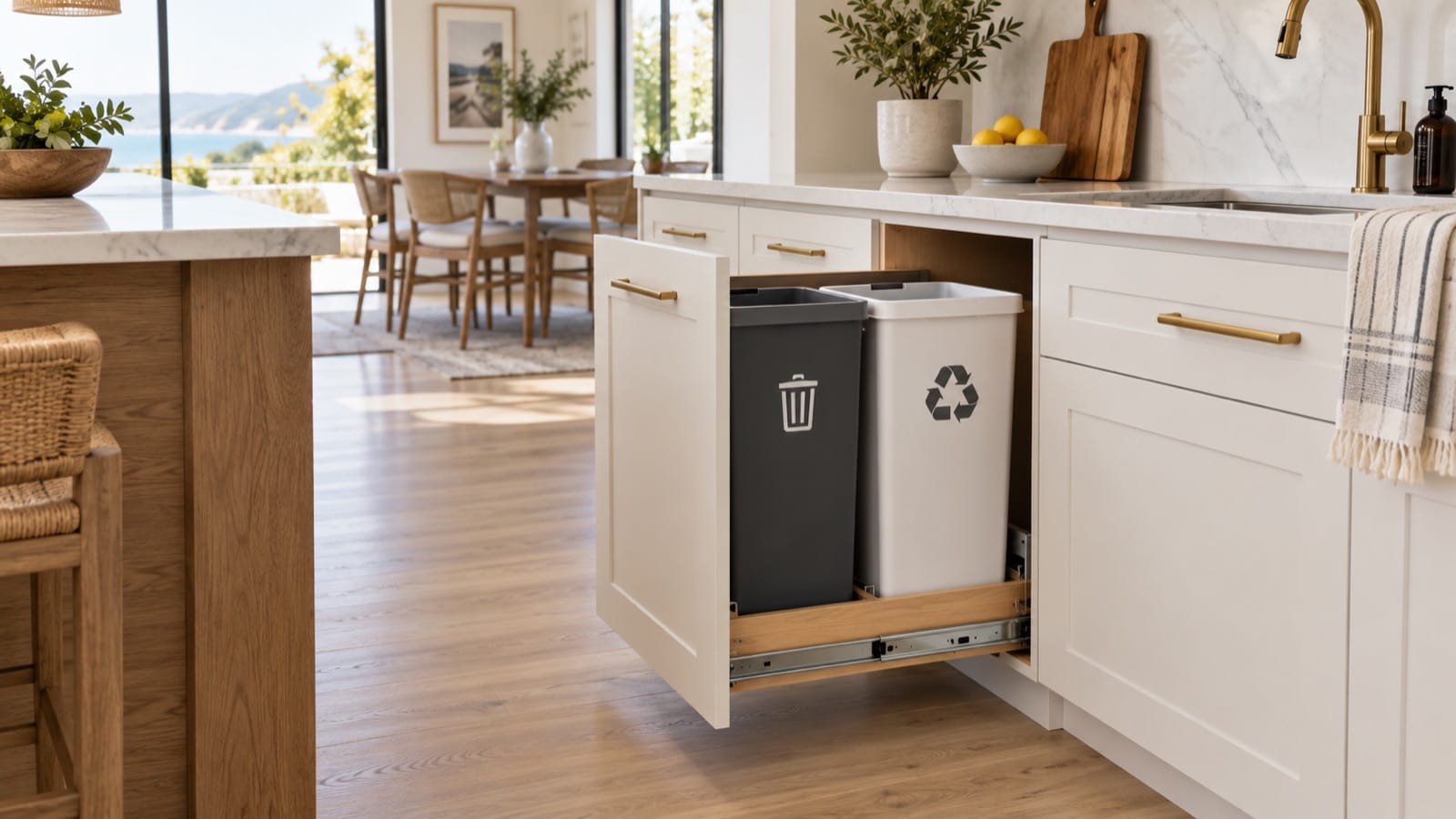
Airbnb trash instructions should tell guests which container to use, where to find it, and what to do when it is full. Add the recycling details that apply to your property's actual collection service, rather than assuming visitors know the local system.
The guest should be able to complete an ordinary disposal task without searching through a long rulebook. Put a short note near the bins and a matching section in the welcome guide.
A trash-and-recycling template
Waste and recycling at [property]
Everyday rubbish: [bin and location].
Recycling: [container and accepted materials, verified locally].
Food waste, if collected: [container and relevant preparation instructions].
Spare bags: [location].
When the indoor bin is full: [simple route to the correct collection point].
If the collection area is full or inaccessible: message [host/method].Before checkout, please [short request already reflected in your checkout information]. We handle [host's collection and turnover responsibilities].
Remove categories your collection service does not offer. A generic three-bin template becomes misleading when the building only has two waste streams or requires glass to go elsewhere.
Verify local rules before writing them
Use the current information from your municipality, building manager, or waste operator. Check accepted materials, bag requirements, collection-point access, and any separate arrangements for glass or food waste.
Bin colours are not universal. Name the container by its actual location and label as well as colour. Guests with colour-vision differences should be able to identify the right one without relying on a colour alone.
Airbnb's sustainable-stay guidance recommends making local sorting rules understandable. The important principle is clarity; the specific rules must come from your local collection system.
Write the walk to the outdoor bins
Describe the route from the guest entrance, including the correct gate or shared collection room. Add one clear photograph if several doors look similar. Share any sensitive access details privately.
For a building, check that the disposal route is available at the times guests are likely to need it. Avoid asking guests to leave bags in a hallway if that is not an approved collection location.
Keep collection-day work explicit
If the host or cleaner manages collection day, say so. If guests have an agreed task during a longer stay, explain the exact task and timing in advance. Do not introduce a complicated collection duty in a last-minute checkout message.
Collection day: [host/team] manages the outdoor bins on [verified day]. During your stay, please use [normal disposal arrangement]. If you notice [overflow or missed collection], message us so we can arrange it.
Make full bins a host problem guests can report
Provide a fallback contact and deal with missed collections promptly. Guests should not have to discover an unlisted disposal facility or transport rubbish elsewhere because the property's normal arrangement has failed.
During turnover, check that containers are usable, labels match the guide, and spare bags are present. Add these steps to your cleaning routine and consumables count.
How much should guests do before checkout?
Keep the request short, practical, and consistent with what guests saw in advance. Explain the specific bin rather than asking them to “sort everything properly.” Our checkout-instructions guide helps keep the wider departure list manageable.
Turn local routines into clear guest instructions. The Check-in Guide puts your verified waste, recycling, and home information in one welcome book.